
Note · White flowers
Frangipani
Plumeria
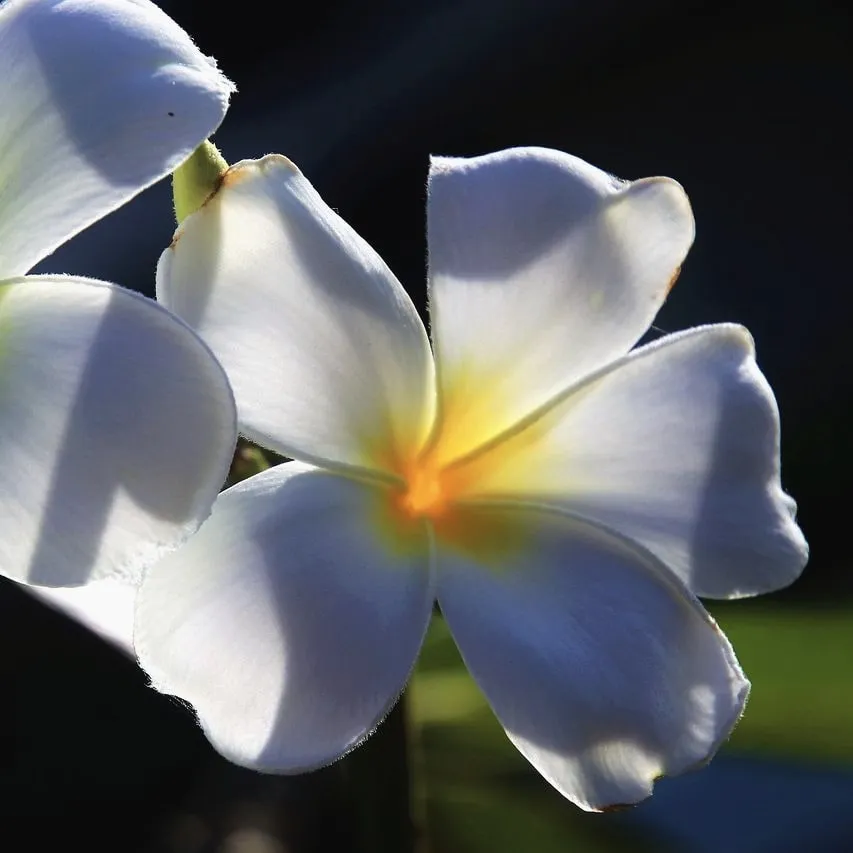
Photo: pasja1000 (new tab) / Pixabay (new tab)
The frangipani flower, emblem of tropical islands, smells of apricot, coconut and jasmine. Its absolute is rare; the note is often recomposed.
What it brings
A sunny, creamy, fruity floral note.
Origins and uses
Frangipani, of the genus Plumeria, is a shrub native to the tropical and subtropical Americas, now found throughout the tropics, from Hawaii to Asia. Its fragrant flowers are used to make Polynesian flower garlands and are associated with temple offerings in Asia. Its name is said to come from the Italian marquis Muzio Frangipani, who created an almond-based scent for gloves in the sixteenth century, which the flower's smell was said to recall.
In perfumery, the frangipani flower evokes apricot, coconut and jasmine, with a creamy, sunny roundness. As its absolute is rare, the note is most often recreated. It sits in the heart of white florals and tropical compositions.
In our catalogue, it forms the heart of Frangipani by Ormonde Jayne, with rose, tuberose, water lily and orchid.
Text written with the help of AI, based on reference sources: encyclopedias, raw-material manufacturers and official information from the fragrance houses.
Material profile
- Family
- White flowers
- Nature
- Perfumer’s accord
- Botanical name
- Plumeria
- Origin
- A tropical flower, most often recomposed.
- How it is obtained
- Volatile solvent extractionRecomposed by the perfumer
- On Volute
- 3 fragrances