
Note · Leathers and smoke
Pine tar
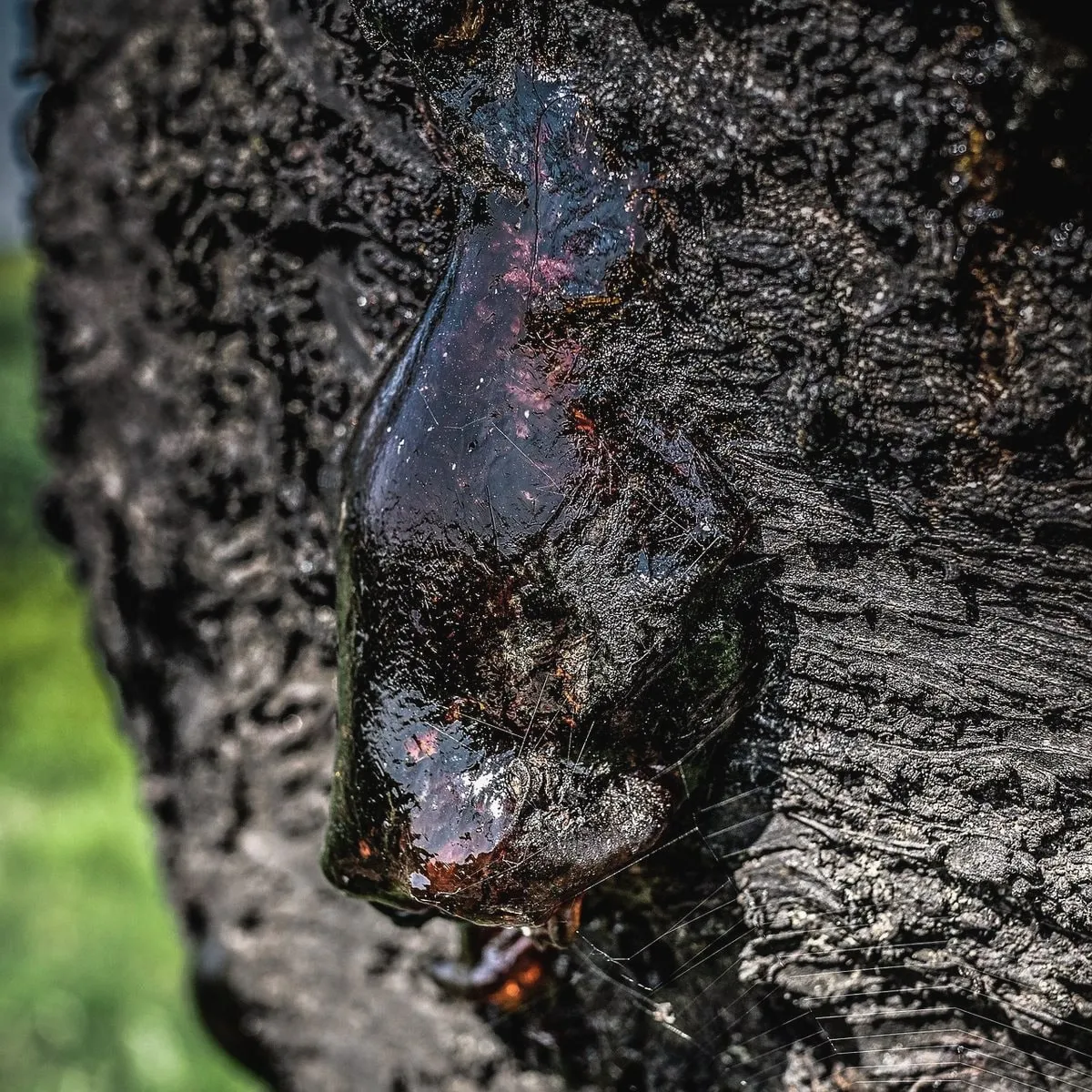
Pine tar smells of burnt wood, smoke and resin. Once rectified, it loses its harshest edges and keeps a smoky, almost leathery note that perfumers dose sparingly.
What it brings
A smoky, resinous depth.
Origins and uses
Pine tar is obtained by carbonising pine wood at high temperature without air: a dry distillation that leaves charcoal and collects the tar. Stumps and roots were traditionally used. For centuries it protected ships, their decks and rigging, to the point of becoming one of Sweden's most valuable exports in the seventeenth century; it has also long been added to certain soaps.
In perfumery, it brings a smoky, resinous, almost leathery note that evokes wood fires and old ships. Being powerful, it is used in very small doses, in the heart or base of woody, leathery or amber compositions, where it adds depth and an impression of burnt wood.
In our catalogue, pine tar appears in the heart of Decision 42 by Amouage, with incense, myrrh and juniper berries, to evoke a juniper struck by lightning.
Text written with the help of AI, based on reference sources: encyclopedias, raw-material manufacturers and official information from the fragrance houses.
Material profile
- Family
- Leathers and smoke
- Nature
- Natural material
- Origin
- Obtained by heating resinous pine wood, then rectified (redistilled) for perfumery.
- How it is obtained
- Steam distillation
- On Volute
- 2 fragrances