
Note · Resins and balsams
Mastic
Pistacia lentiscus
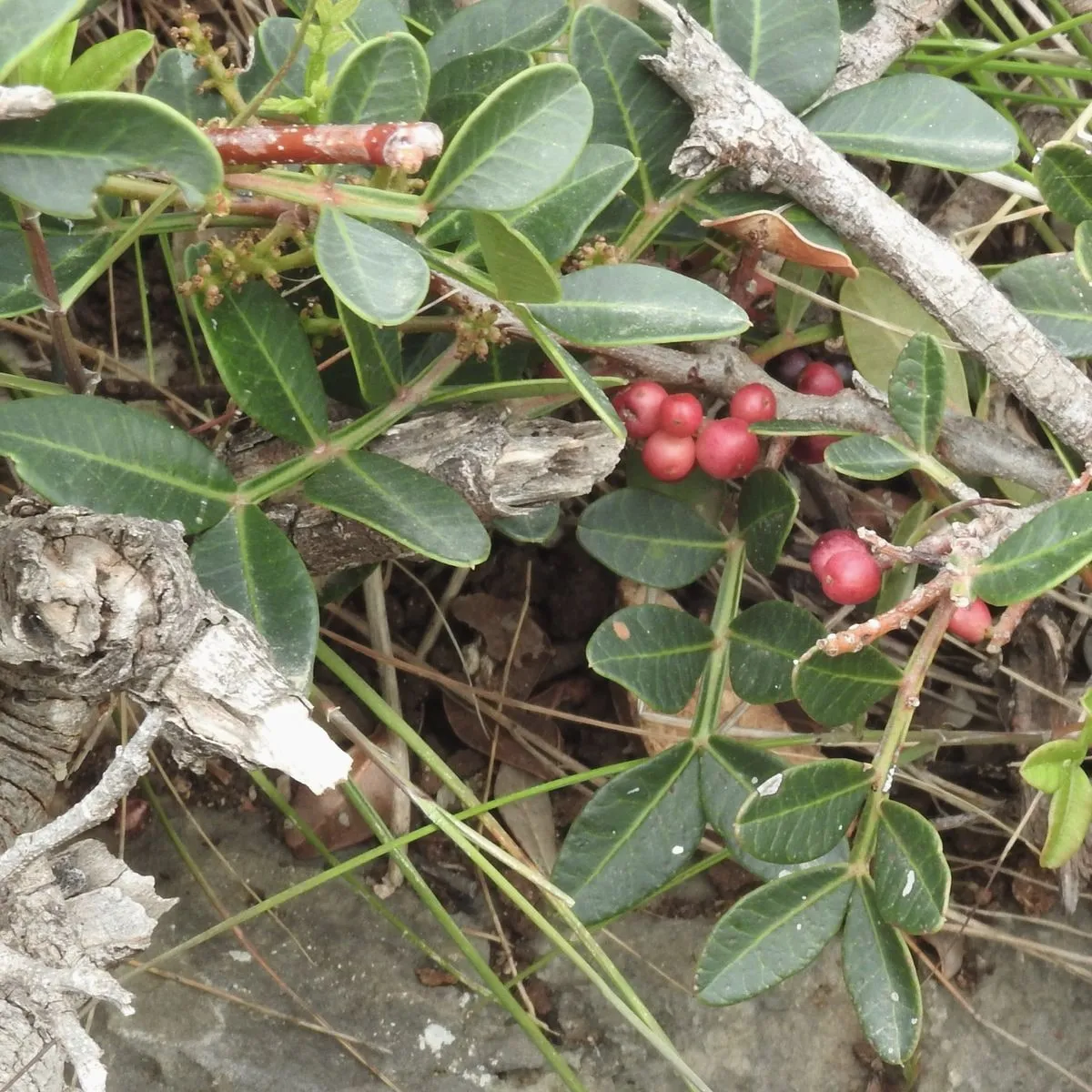
Photo: Robert Flogaus-Faust (new tab) / Wikimedia Commons (new tab), CC BY 4.0 (new tab)
Mastic, or the lentisk tree, yields an oil and a resin with balsamic, green, slightly peppery scents reminiscent of the garrigue.
What it brings
A resinous, Mediterranean freshness.
Origins and uses
Mastic tree, Pistacia lentiscus, also called lentisk, is an evergreen shrub of the Mediterranean scrubland, from North Africa to the Near East. On the Greek island of Chios, its stems are cut repeatedly to collect an oleoresin that hardens into pale yellow drops: mastic, with a fairly strong balsamic smell. This know-how has been on UNESCO's list of intangible cultural heritage since 2014. Mastic is chewed like gum to freshen the breath, and it flavours pastries, sweets and liqueurs such as mastika.
In perfumery, the resin or an essence obtained by distillation is used. Mastic brings a resinous, green, slightly peppery note that evokes the sunlit scrubland; it adds relief to aromatic, woody and leather accords.
In our catalogue, mastic appears in the base of Mirto di Panarea by Acqua di Parma, with juniper and cedarwood, and alongside cypress and galbanum in Iris Malikhân by Maison Crivelli.
Text written with the help of AI, based on reference sources: encyclopedias, raw-material manufacturers and official information from the fragrance houses.
Material profile
- Family
- Resins and balsams
- Nature
- Natural material
- Botanical name
- Pistacia lentiscus
- Origin
- A Mediterranean shrub, grown notably on the Greek island of Chios.
- How it is obtained
- Steam distillationHarvested by incision
- On Volute
- 4 fragrances