
Note · Aromatic herbs
Chamomile
Matricaria chamomilla, Chamaemelum nobile
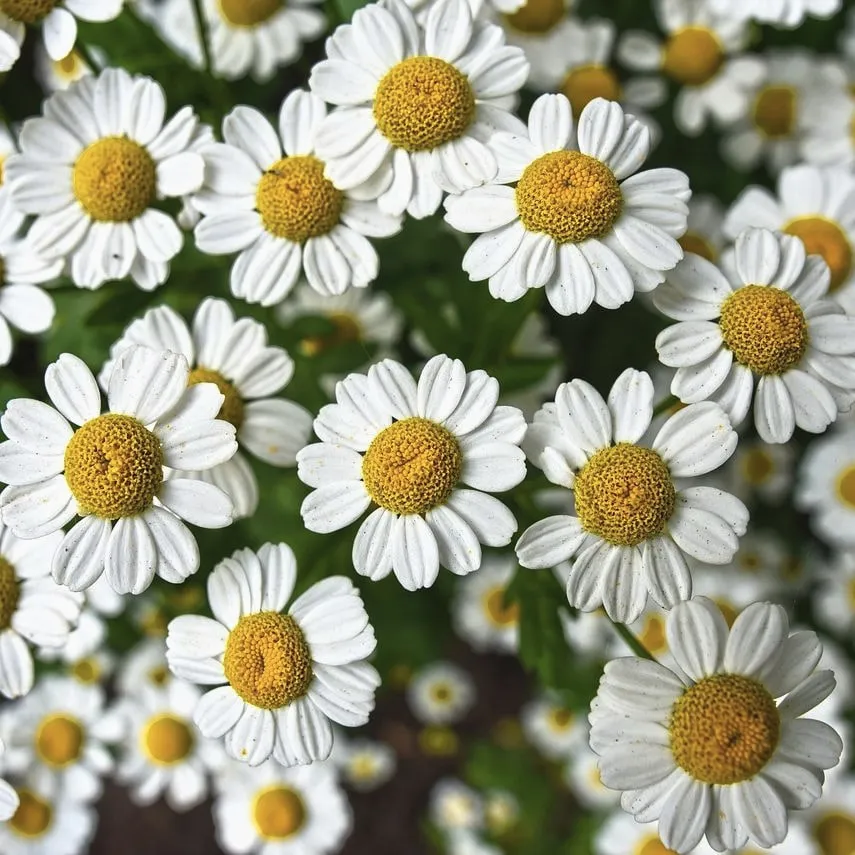
Photo: MabelAmber (new tab) / Pixabay (new tab)
Chamomile flowers yield a herbaceous, fruity, slightly honeyed oil, with a very soft nuance of apple and hay.
What it brings
A soothing herbaceous softness.
Origins and uses
Roman chamomile, Chamaemelum nobile, is a small perennial plant native to the Atlantic coast of Europe and North Africa; despite its name, it is not native to Italy. From June to September, it bears small white flower heads with yellow centres, and the whole plant is pleasantly fragrant: the leaves of its double-flowered variety smell of apple. It is used in herbal teas, cooking and cosmetics.
Steam-distilled, its flowers give a pale yellow essential oil, soft and fruity, made up mostly of esters; about 100 kilos of flowers are needed for less than a litre of oil. In perfumery, chamomile brings a herbaceous, fruity, slightly honeyed note, with a hint of apple and hay.
In our catalogue, it opens Soleil de Jeddah by Stéphane Humbert Lucas 777, with lemon and osmanthus, and forms the heart of Hold Me Closer by Nishane, with earth and hawthorn.
Text written with the help of AI, based on reference sources: encyclopedias, raw-material manufacturers and official information from the fragrance houses.
Material profile
- Family
- Aromatic herbs
- Nature
- Natural material
- Botanical name
- Matricaria chamomilla, Chamaemelum nobile
- Origin
- Flowers grown in Europe, Egypt and Morocco.
- How it is obtained
- Steam distillationVolatile solvent extraction
- On Volute
- 3 fragrances