
Note · Aromatic herbs
Oregano
Origanum vulgare
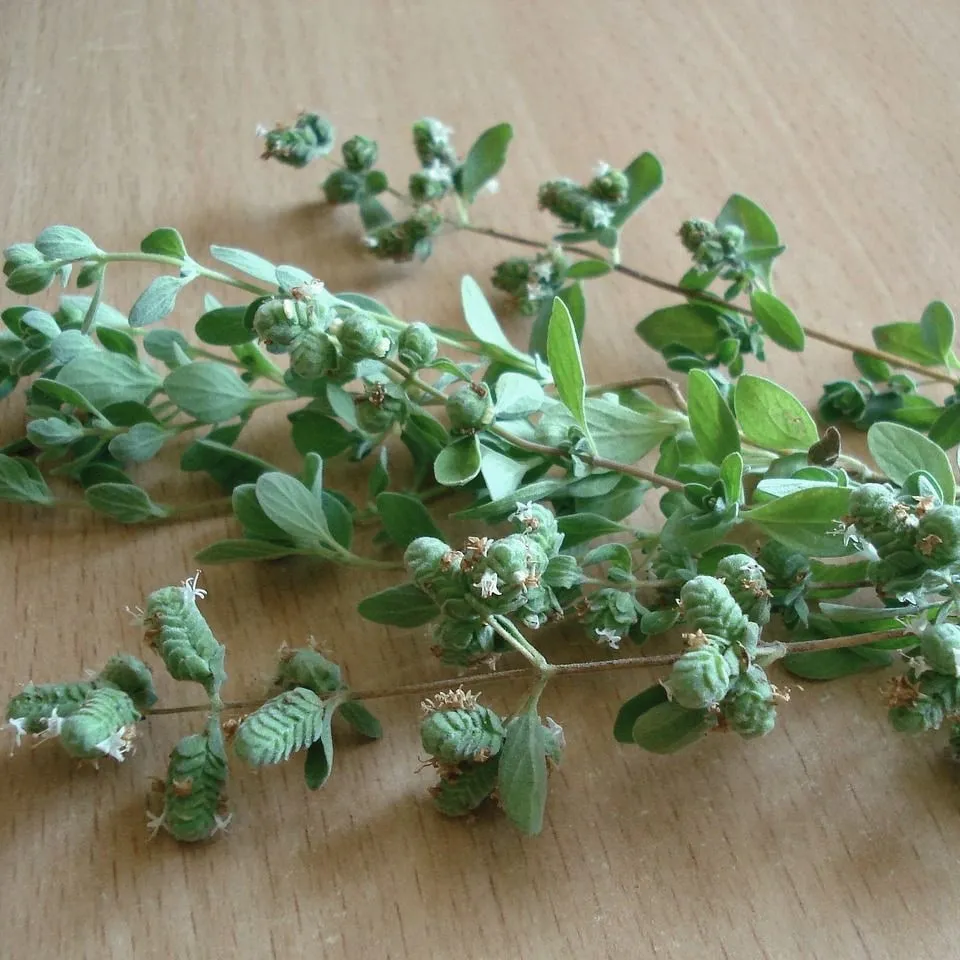
Photo: evgen-orlova (new tab) / Pixabay (new tab)
A herb of dry hillsides, oregano yields a warm, peppery, thyme-like oil that evokes southern cooking as much as sun-baked scrubland. It is rare in perfumery and used in touches.
What it brings
A dry, almost culinary aromatic warmth that lends character to a spicy opening.
Origins and uses
Oregano, Origanum vulgare, is a perennial herb of the mint family, native to Europe and later spread as far as the Middle East. Its leaves and flowering tops, fresh or dried, flavour Greek, Italian and Portuguese cooking: it is the herb of pizza marinara and tomato sauces, where it pairs with basil and thyme. Its essential oil is rich in carvacrol, a molecule with antiseptic properties that gives it its warm, pungent character.
In perfumery, oregano harvested around the Mediterranean, in Spain, Turkey or Morocco, is distilled. Its essence brings an aromatic, warm, herbaceous, slightly spicy note that evokes the scrubland. Powerful, it is used in small doses, at the top, to give relief to woody, leathery or amber compositions.
In our catalogue, oregano opens Interlude Man by Amouage, with bergamot and pimento berry, before a heart of incense, amber and opoponax.
Text written with the help of AI, based on reference sources: encyclopedias, raw-material manufacturers and official information from the fragrance houses.
Material profile
- Family
- Aromatic herbs
- Nature
- Natural material
- Botanical name
- Origanum vulgare
- Origin
- The Mediterranean: Spain, Turkey, Morocco.
- How it is obtained
- Steam distillation
- On Volute
- 1 fragrance