
Note · Spices
Star anise
Illicium verum
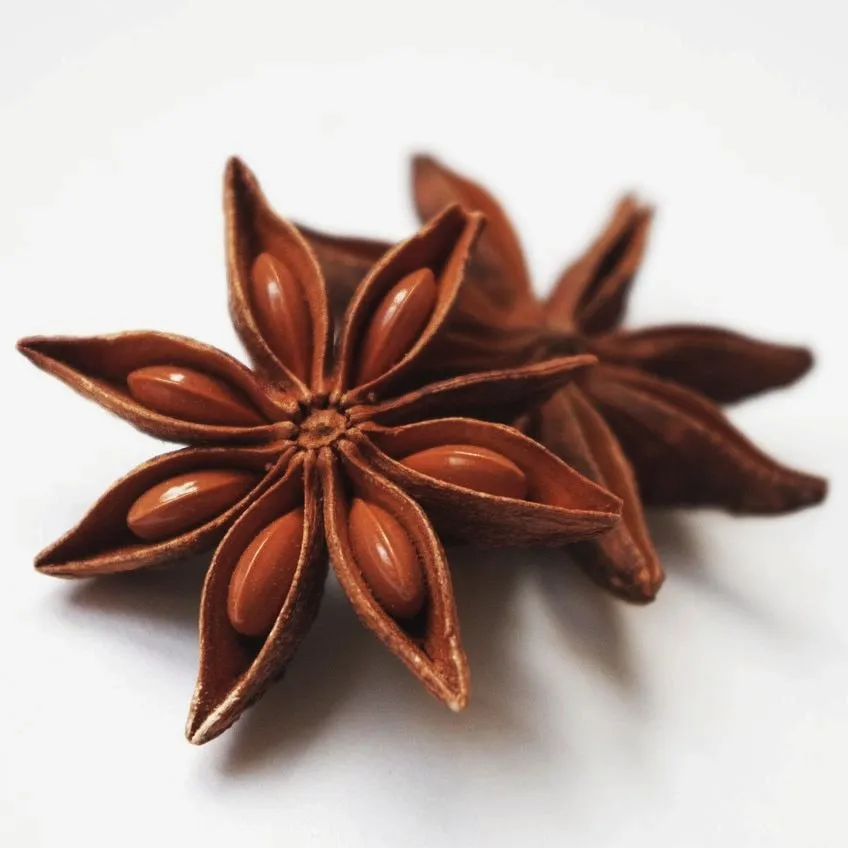
Photo: Ajale (new tab) / Pixabay (new tab)
The star-shaped fruit of the badian tree yields a sweet, fresh aniseed oil, rounder than green anise.
What it brings
An aniseed freshness that brightens lavender and gourmand notes.
Origins and uses
Star anise, or Chinese star anise, is the fruit of Illicium verum, a tree native to China; Jiangxi province alone supplies most of the world's production, and it is also grown in Vietnam. This woody, star-shaped fruit, made of eight carpels each holding a shiny seed, is picked green and then sun-dried. Rich in anethole, it has a stronger aniseed taste than green anise. It is found in the Chinese five-spice blend, in pastis or ouzo, and even serves as a source of shikimic acid for pharmacy. It must not be confused with Japanese star anise, which is toxic.
In perfumery, its distilled essence brings an aniseed, warm, slightly spicy note reminiscent of liquorice. It lifts fougères, aromatics and gourmands.
In our catalogue, star anise opens Une Nuit à Doha by Stéphane Humbert Lucas 777, accompanies lavender in 1725 Casanova by Histoires de Parfums and angelica in Fou d'Absinthe by L'Artisan Parfumeur.
Text written with the help of AI, based on reference sources: encyclopedias, raw-material manufacturers and official information from the fragrance houses.
Material profile
- Family
- Spices
- Nature
- Natural material
- Botanical name
- Illicium verum
- Origin
- China, Vietnam.
- How it is obtained
- Steam distillation
- On Volute
- 6 fragrances