
Note · Flowers
Hibiscus
Hibiscus sabdariffa
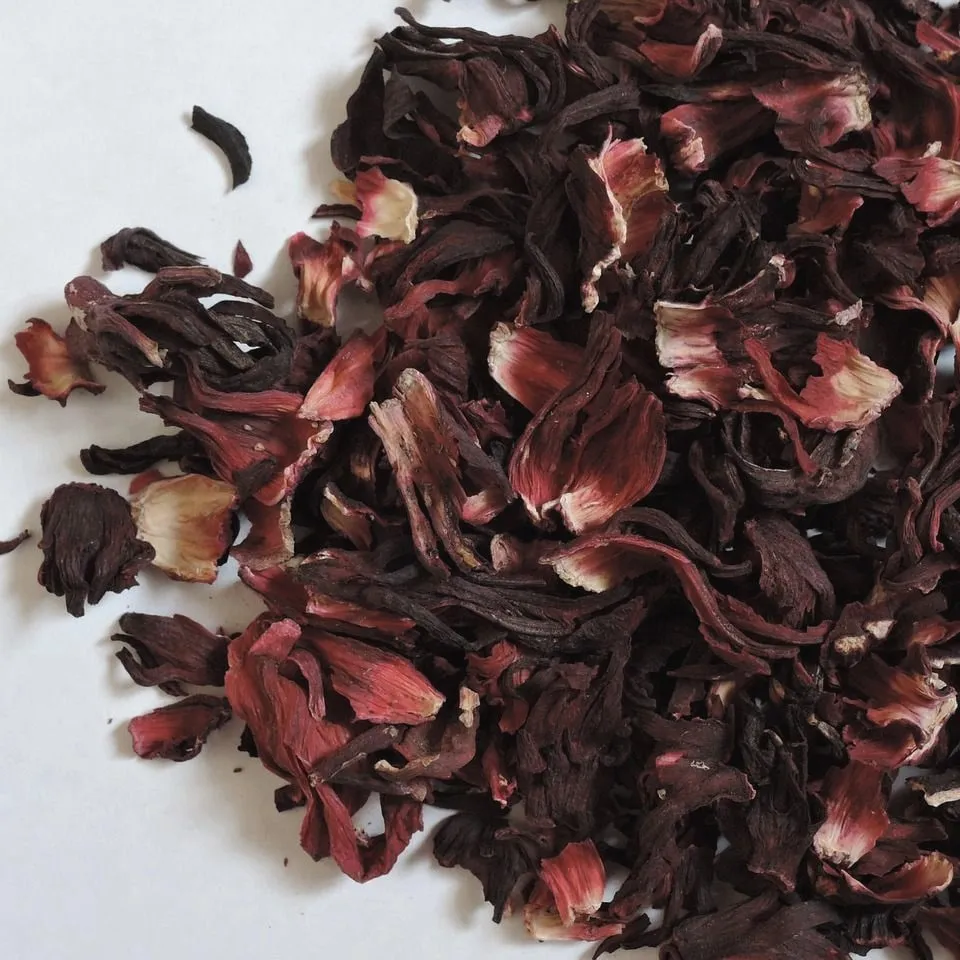
Photo: AnnTS (new tab) / Pixabay (new tab)
In perfumery, hibiscus mostly evokes the infusion of its red calyces: a fruity, tangy, slightly floral note close to redcurrant.
What it brings
A fruity, colourful liveliness that energises rose.
Origins and uses
The hibiscus used in drinks is Hibiscus sabdariffa, a plant of the mallow family native to Africa, also called roselle, bissap or karkadé. It is not the flower itself that is used, but the red calyx that forms after it falls. Dried and then boiled, often with sugar, cinnamon or mint, these calyces give bissap, a tangy drink of a deep red, served hot in Egypt and cold in Europe.
In perfumery, hibiscus mainly evokes this infusion: a recreated note, fruity, tangy and slightly floral, close to redcurrant. It brightens roses, red berries and spices, and goes well with tea accords.
In our catalogue, hibiscus is at the centre of Hibiscus Mahajád by Maison Crivelli, with Damask rose, blackcurrant, spearmint and cinnamon, as well as leather and musk.
Text written with the help of AI, based on reference sources: encyclopedias, raw-material manufacturers and official information from the fragrance houses.
Material profile
- Family
- Flowers
- Nature
- Perfumer’s accord
- Botanical name
- Hibiscus sabdariffa
- Origin
- An accord inspired by hibiscus flower infusion.
- How it is obtained
- Recomposed by the perfumer
- On Volute
- 1 fragrance
The fragrances that reveal it
In the same family · Flowers
- Blue poppy
- Broom
- Camellia
- Carnation
- Centifolia rose
- Cherry blossom
- Crocus flower
- Cyclamen
- Damask rose
- Freesia
- Geranium
- Ginger flower
- Hawthorn
- Heliotrope
- Heliotropin
- Honeysuckle
- Hyacinth
- Jonquil
- Lilac
- Lily
- Lily of the valley
- Linden blossom
- Lotus flower
- Magnolia
- Mahonial
- Mimosa
- Narcissus
- Orchid
- Orris
- Osmanthus
- Peach blossom
- Peony
- Petalia
- Raspberry blossom
- Rose
- Rose oxide
- Salicylate notes
- Sweet pea
- Tagetes
- Tobacco flower
- Tulip
- Violet
- Water lily