
Note · Fruits
Apricot
Prunus armeniaca
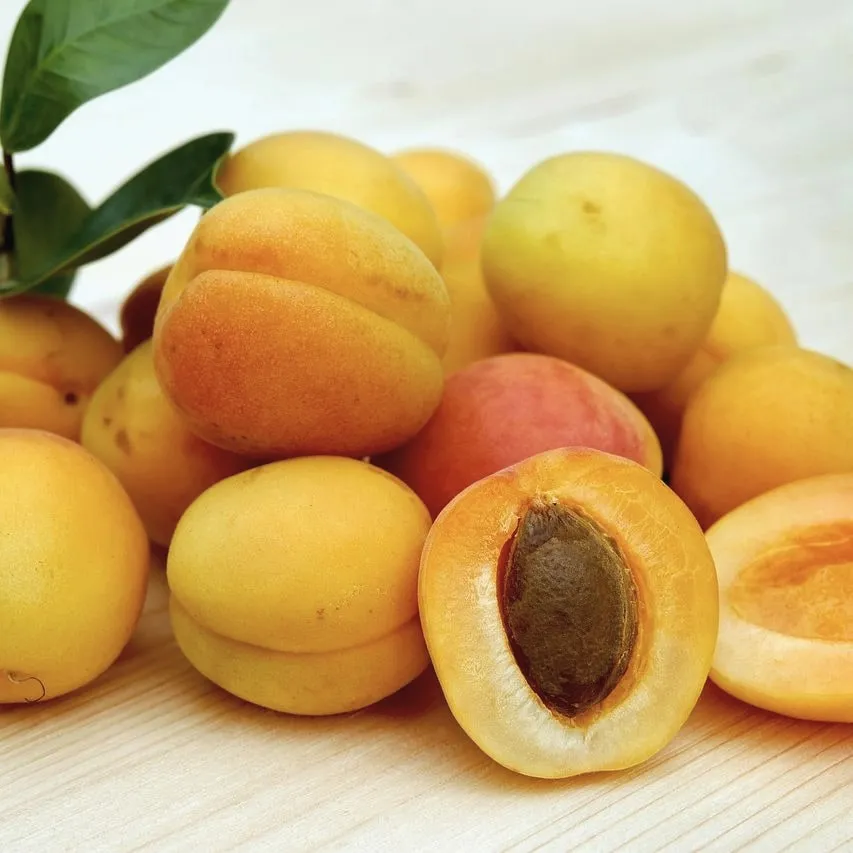
Photo: Couleur (new tab) / Pixabay (new tab)
Apricot is rebuilt with lactones and velvety fruity notes. It evokes golden, juicy, slightly creamy flesh, softer and rounder than peach.
What it brings
A sunny roundness that gives white flowers the glow of ripe fruit.
Origins and uses
The apricot is the fruit of Prunus armeniaca, of the rose family. Its exact origin is still debated, between eastern Iran, Central Asia and China. It reached the Near East through Iran and Armenia around the first century BC: the Greeks called it the "Armenian apple", hence its Latin name. Turkey is now the leading producer, ahead of Iran, Italy and France. It is eaten fresh, dried, in jam or in pastries, and its kernels flavour certain liqueurs.
In perfumery, the fruit yields no essence: apricot is a note recreated by the perfumer. It brings a velvety, juicy, slightly candied softness that pairs with white flowers, osmanthus and honey.
In our catalogue, apricot appears in Jasmin des Anges by Dior, where it accompanies jasmine and honey.
Text written with the help of AI, based on reference sources: encyclopedias, raw-material manufacturers and official information from the fragrance houses.
Material profile
- Family
- Fruits
- Nature
- Synthetic molecule
- Botanical name
- Prunus armeniaca
- Origin
- A note recomposed by the perfumer: the fruit yields no essential oil.
- How it is obtained
- Laboratory synthesisRecomposed by the perfumer
- On Volute
- 4 fragrances