
Note · Fruits
Passion fruit
Passiflora edulis
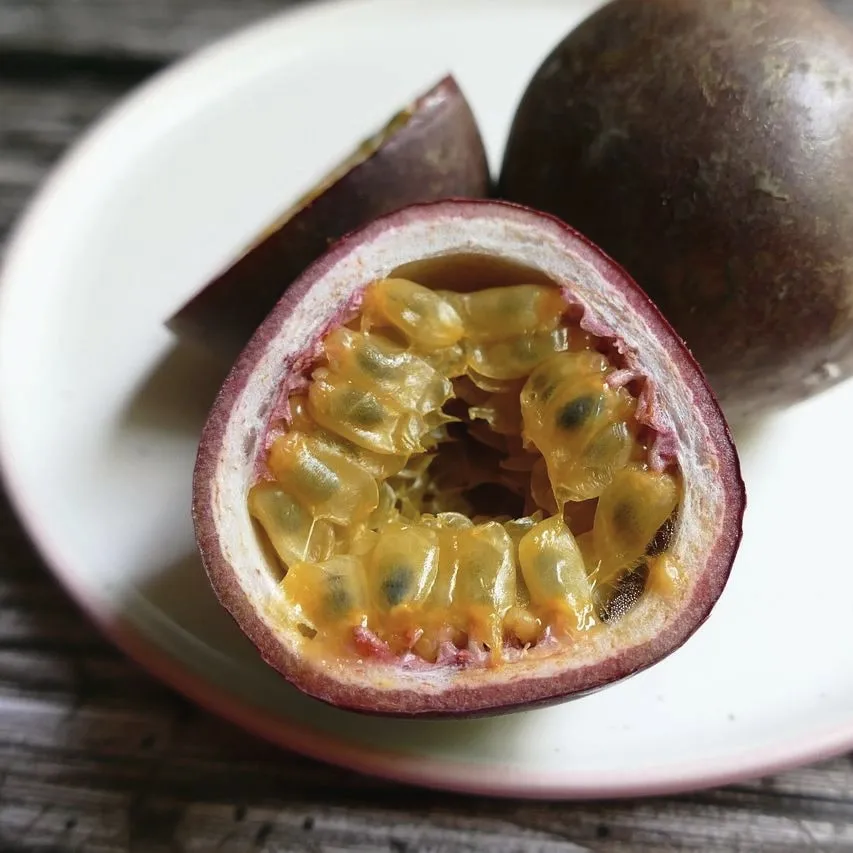
Photo: MissSuki (new tab) / Pixabay (new tab)
Passion fruit is recreated with sulphurous, fruity molecules: a tropical, tangy, thirst-quenching note, slightly exotic.
What it brings
A juicy, tangy sparkle that contrasts with dark woods.
Origins and uses
Passion fruit is the fruit of several passionflowers, notably Passiflora edulis. Its name goes back to missionaries in Brazil who, around 1700, saw symbols of the Passion of Christ in the plant's flower. The fruit, round or oval, yellow, red, purple or green depending on the variety, contains many seeds surrounded by a translucent, juicy pulp, which is eaten as it is or pressed into juice.
In perfumery, it yields no essence: its note is recreated with fruity molecules, some of them sulphurous, that convey its liveliness. Tropical, tangy and thirst-quenching, it brightens florals and contrasts with dark woods.
In our catalogue, passion fruit opens Moon Carnival by Vilhelm Parfumerie, with bergamot and freesia, and converses with oud, saffron and rose in Oud Maracujá by Maison Crivelli.
Text written with the help of AI, based on reference sources: encyclopedias, raw-material manufacturers and official information from the fragrance houses.
Material profile
- Family
- Fruits
- Nature
- Synthetic molecule
- Botanical name
- Passiflora edulis
- Origin
- A recomposed note, inspired by maracuja.
- How it is obtained
- Laboratory synthesisRecomposed by the perfumer
- On Volute
- 2 fragrances