Note · Fruits
Champagne
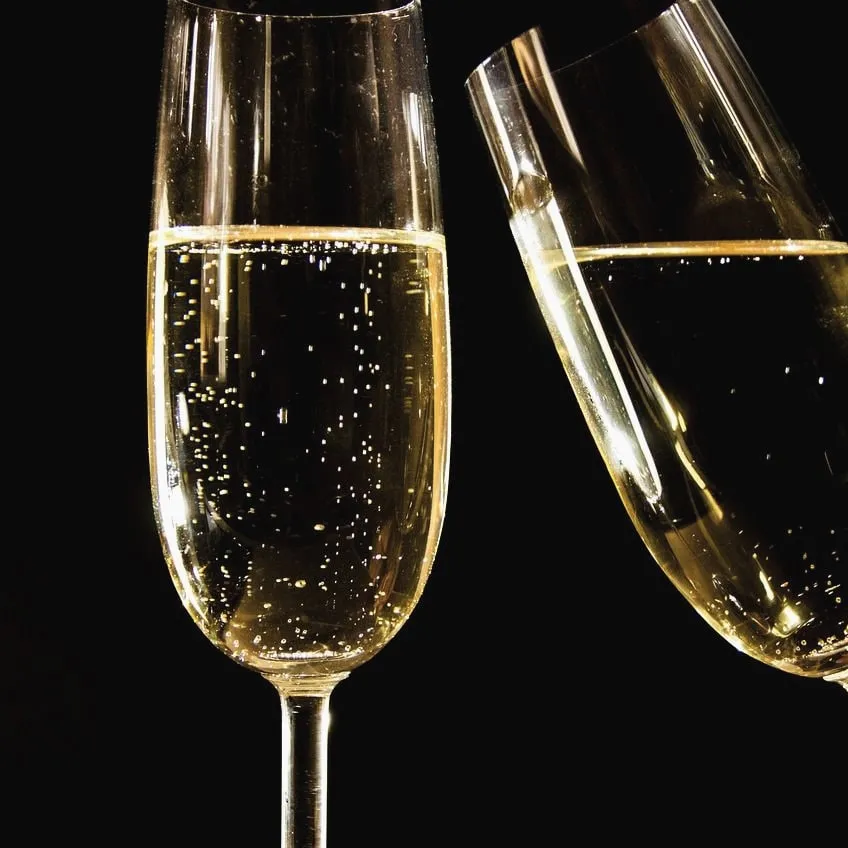
The perfumer cannot distil champagne: he recreates its impression by combining fruity notes (grape, pear, apple), a touch of yeast and brioche, and sparkling materials evoking the bubbles. The accord brings a festive, fresh, slightly winey opening.
What it brings
A sparkling, fruity, festive brightness.
Origins and uses
Champagne is a sparkling wine protected by a controlled designation of origin, produced in Champagne, in north-eastern France, mainly in the Marne and Aube. It relies on three main grape varieties: white chardonnay, and two black ones, pinot noir and pinot meunier. Its bubbles come from a second fermentation in the bottle, the "prise de mousse"; a 1927 law reserves the term "méthode champenoise" for wines made sparkling by natural fermentation in the bottle.
In perfumery, champagne is a recreated accord inspired by the wine. The perfumer seeks to convey its effervescence and freshness: a sparkling, slightly fruity and winey note, sometimes brioche-like. Placed at the top, it adds brightness and a festive feel.
In our catalogue, champagne opens Remarkable People by Etat Libre d'Orange, with grapefruit and cardamom, before a heart of jasmine, curry and pepper.
Text written with the help of AI, based on reference sources: encyclopedias, raw-material manufacturers and official information from the fragrance houses.
Material profile
- Family
- Fruits
- Nature
- Perfumer’s accord
- Origin
- A recomposed accord, inspired by the sparkling wine of Champagne.
- How it is obtained
- Recomposed by the perfumer
- On Volute
- 2 fragrances