
Note · Gourmand notes
Sugar cane
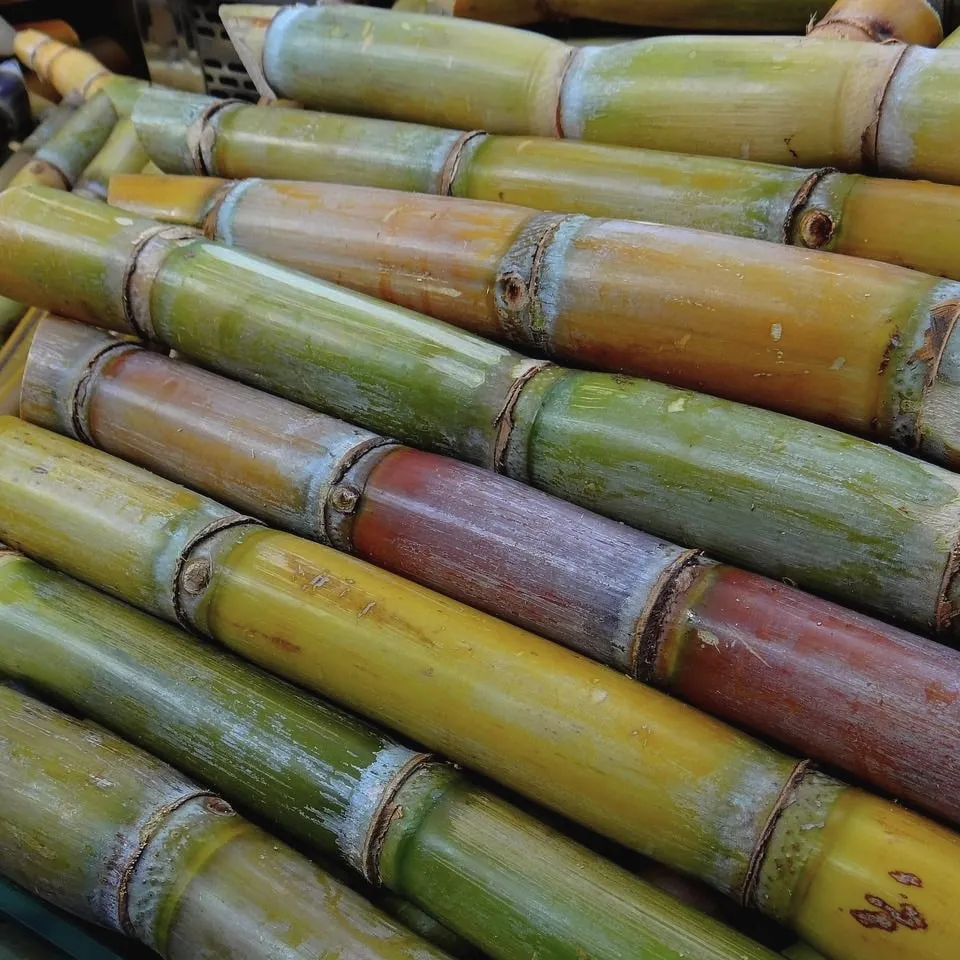
Photo: Schreib-Engel (new tab) / Pixabay (new tab)
Sugar cane brings a green, caramelised sweetness, lighter than cooked sugar.
What it brings
A clear sweetness that rounds out the base.
Origins and uses
Sugar cane is a tall grass of the genus Saccharum, native to New Guinea, where it is thought to have been domesticated before spreading towards Asia and the Pacific. It is now grown throughout the tropical and subtropical regions, from Brazil to India. Its juice gives cane sugar, molasses and, once fermented and distilled, agricultural rum.
In perfumery, sugar cane is not extracted: it is a note recreated by the perfumer, who seeks to convey a clear, slightly green, caramelised sweetness. It readily accompanies notes of rum, coffee or vanilla, and rounds out a base without weighing it down.
In our catalogue, it appears in the base of Black Phantom "Memento Mori" by Kilian Paris, where it extends rum, coffee and almond with a sugary softness.
Text written with the help of AI, based on reference sources: encyclopedias, raw-material manufacturers and official information from the fragrance houses.
Material profile
- Family
- Gourmand notes
- Nature
- Perfumer’s accord
- Origin
- A recomposed accord.
- How it is obtained
- Recomposed by the perfumer
- On Volute
- 1 fragrance
The fragrances that reveal it
In the same family · Gourmand notes
- Almond
- Almond milk
- Amaretto
- Black truffle
- Brandy
- Buckwheat
- Butter
- Calvados
- Caramel
- Chantilly cream
- Chestnut
- Chocolate
- Cocoa
- Coconut
- Coffee
- Cognac
- Cotton candy
- Coumarin
- Crème brûlée
- Gourmand accord
- Halva
- Hazelnut
- Honey
- Liquorice
- Malt
- Marshmallow
- Milky notes
- Nougat
- Pistachio
- Praline
- Rice
- Roasted barley
- Rose liqueur
- Rum
- Sesame
- Sugar
- Toffee
- Tonka bean
- Vanilla
- Vodka
- Wheat
- Whipped cream
- Whisky