
Note · Gourmand notes
Sugar
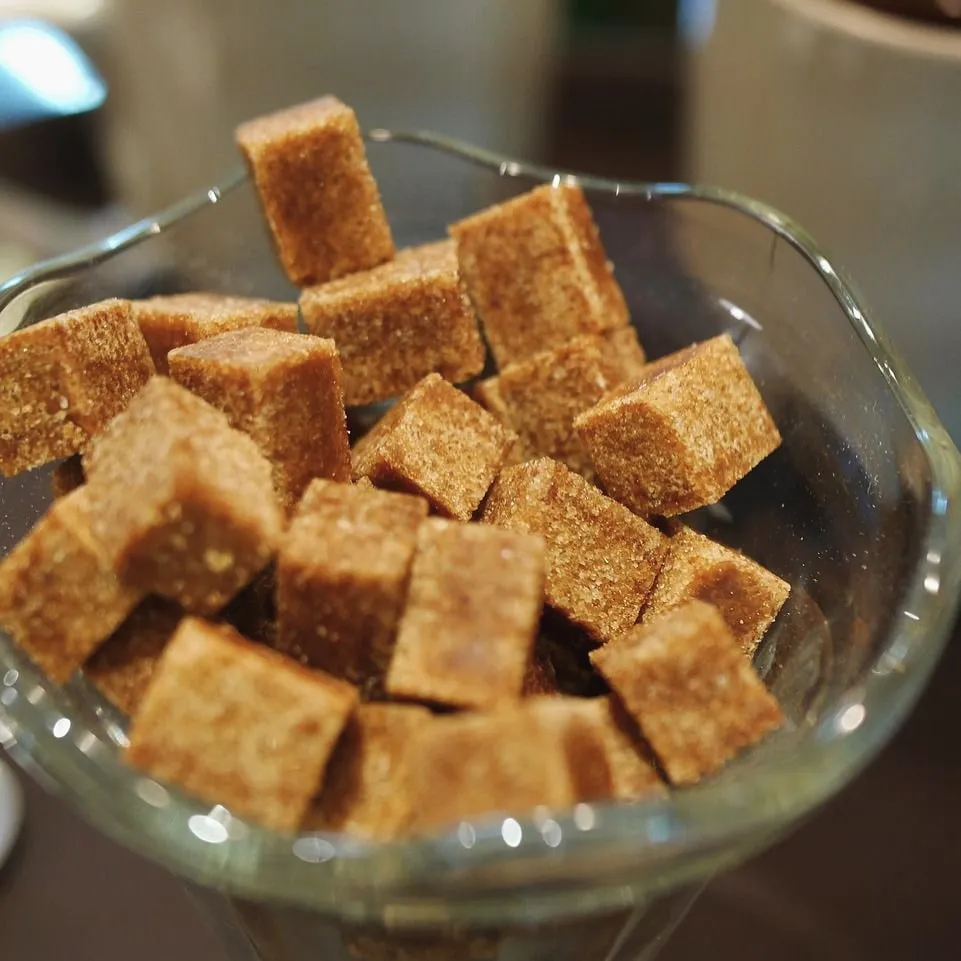
Photo: melnitsa12 (new tab) / Pixabay (new tab)
The sugar note evokes brown or caramelised sugar: a warm, lightly toasted sweetness built around molecules with caramel and candyfloss facets.
What it brings
An immediate, comforting sweetness.
Origins and uses
Sugar has almost no smell when pure: it is when cooked that it turns to caramel and releases its aromas. In perfumery, the sugar note is therefore a recreated accord, built around molecules with caramel and candyfloss facets. The best known is ethyl maltol, a close relative of maltol, with a sweet smell of caramelised sugar, jam and candyfloss. Used in confectionery, it also helps perfumers build gourmand fragrances, and it first appeared in Mugler's Angel, in 1992.
The sugar note evokes brown or caramelised sugar: a warm, slightly toasted sweetness. It sits mainly in the base, where it extends vanilla, cocoa or fruit.
In our catalogue, sugar frames Sugar Addict by Born To Stand Out, from the top with cinnamon to the base with vanilla and rum, and softens the base of Mango Skin by Vilhelm Parfumerie.
Text written with the help of AI, based on reference sources: encyclopedias, raw-material manufacturers and official information from the fragrance houses.
Material profile
- Family
- Gourmand notes
- Nature
- Perfumer’s accord
- Origin
- An accord recomposed by the perfumer.
- How it is obtained
- Recomposed by the perfumer
- On Volute
- 6 fragrances
The fragrances that reveal it
In the same family · Gourmand notes
- Almond
- Almond milk
- Amaretto
- Black truffle
- Brandy
- Buckwheat
- Butter
- Calvados
- Caramel
- Chantilly cream
- Chestnut
- Chocolate
- Cocoa
- Coconut
- Coffee
- Cognac
- Cotton candy
- Coumarin
- Crème brûlée
- Gourmand accord
- Halva
- Hazelnut
- Honey
- Liquorice
- Malt
- Marshmallow
- Milky notes
- Nougat
- Pistachio
- Praline
- Rice
- Roasted barley
- Rose liqueur
- Rum
- Sesame
- Sugar cane
- Toffee
- Tonka bean
- Vanilla
- Vodka
- Wheat
- Whipped cream
- Whisky