
Note · Gourmand notes
Honey
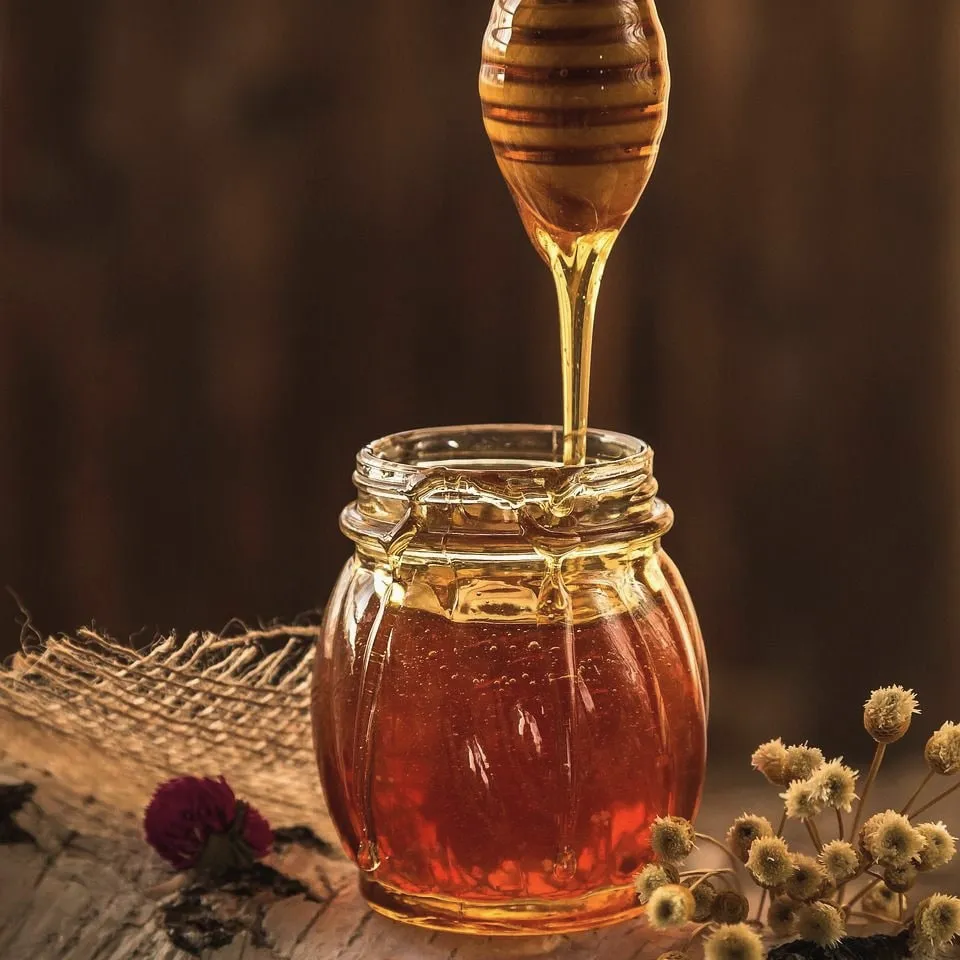
In perfumery, honey is rendered as a warm, ambery, faintly animalic note, often built around beeswax absolute and molecules with floral facets.
What it brings
A golden, sensual sweetness that warms tobacco and flowers.
Origins and uses
Honey is made by bees from flower nectar or honeydew, whose water content they reduce; in their crop, an enzyme turns sucrose into glucose and fructose. Its colour and taste vary with the flowers visited: pale and mild for acacia or linden, stronger and amber for chestnut, heather or lavender. Before cane and beet sugar arrived, it was, with fruit, the only way to sweeten food, and the Greeks called it "heavenly dew".
In perfumery, the honey note is most often recreated, sometimes with the help of a beeswax absolute. It brings a warm, golden, slightly animalic sweetness that enriches flowers, spices and tobaccos.
In our catalogue, honey appears in the heart of Naxos by Xerjoff, with jasmine and cinnamon, and of Jubilation XXV Man by Amouage, as well as in Jasmin des Anges by Dior, with apricot.
Text written with the help of AI, based on reference sources: encyclopedias, raw-material manufacturers and official information from the fragrance houses.
Material profile
- Family
- Gourmand notes
- Nature
- Perfumer’s accord
- Origin
- A recomposed note, sometimes with beeswax absolute.
- How it is obtained
- Recomposed by the perfumerVolatile solvent extraction
- On Volute
- 21 fragrances
The fragrances that reveal it
In the same family · Gourmand notes
- Almond
- Almond milk
- Amaretto
- Black truffle
- Brandy
- Buckwheat
- Butter
- Calvados
- Caramel
- Chantilly cream
- Chestnut
- Chocolate
- Cocoa
- Coconut
- Coffee
- Cognac
- Cotton candy
- Coumarin
- Crème brûlée
- Gourmand accord
- Halva
- Hazelnut
- Liquorice
- Malt
- Marshmallow
- Milky notes
- Nougat
- Pistachio
- Praline
- Rice
- Roasted barley
- Rose liqueur
- Rum
- Sesame
- Sugar
- Sugar cane
- Toffee
- Tonka bean
- Vanilla
- Vodka
- Wheat
- Whipped cream
- Whisky