
Note · Gourmand notes
Liquorice
Glycyrrhiza glabra
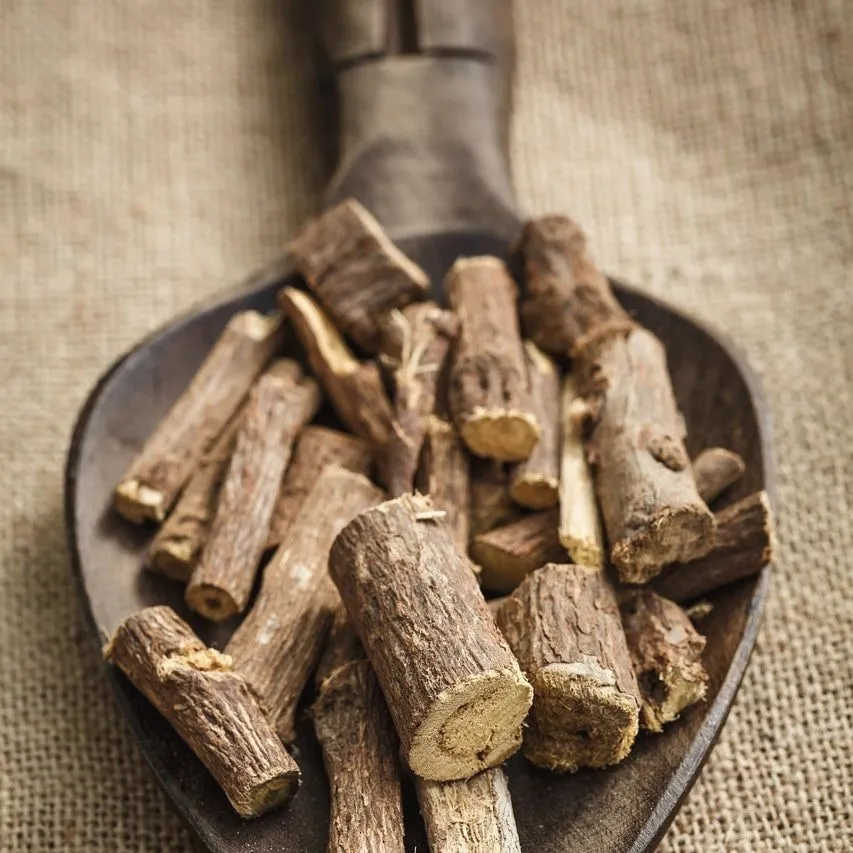
Photo: gate74 (new tab) / Pixabay (new tab)
In perfumery, liquorice is rendered as an aniseed, sweet and lightly woody note, often recomposed from other materials.
What it brings
An aniseed, slightly mysterious sweetness.
Origins and uses
Liquorice, Glycyrrhiza glabra, is a plant of the legume family native to southern Europe and Asia. Its root is used, or more precisely its rhizome, which contains glycyrrhizin, a compound fifty to a hundred times sweeter than refined sugar. It is used in confectionery, chewing sticks and to flavour many drinks, including pastis.
In perfumery, liquorice translates into an aniseed, sweet, slightly woody note, most often recreated from other materials rather than extracted from the root. It pairs naturally with anise, lavender and gourmand notes, and brings a childlike touch to fougères and ambers.
In our catalogue, liquorice pricks the top of 1725 Casanova by Histoires de Parfums, with bergamot and grapefruit, before a heart of lavender and star anise.
Text written with the help of AI, based on reference sources: encyclopedias, raw-material manufacturers and official information from the fragrance houses.
Material profile
- Family
- Gourmand notes
- Nature
- Perfumer’s accord
- Botanical name
- Glycyrrhiza glabra
- Origin
- A note most often recomposed.
- How it is obtained
- Recomposed by the perfumer
- On Volute
- 4 fragrances
The fragrances that reveal it
In the same family · Gourmand notes
- Almond
- Almond milk
- Amaretto
- Black truffle
- Brandy
- Buckwheat
- Butter
- Calvados
- Caramel
- Chantilly cream
- Chestnut
- Chocolate
- Cocoa
- Coconut
- Coffee
- Cognac
- Cotton candy
- Coumarin
- Crème brûlée
- Gourmand accord
- Halva
- Hazelnut
- Honey
- Malt
- Marshmallow
- Milky notes
- Nougat
- Pistachio
- Praline
- Rice
- Roasted barley
- Rose liqueur
- Rum
- Sesame
- Sugar
- Sugar cane
- Toffee
- Tonka bean
- Vanilla
- Vodka
- Wheat
- Whipped cream
- Whisky