
Note · Gourmand notes
Marshmallow
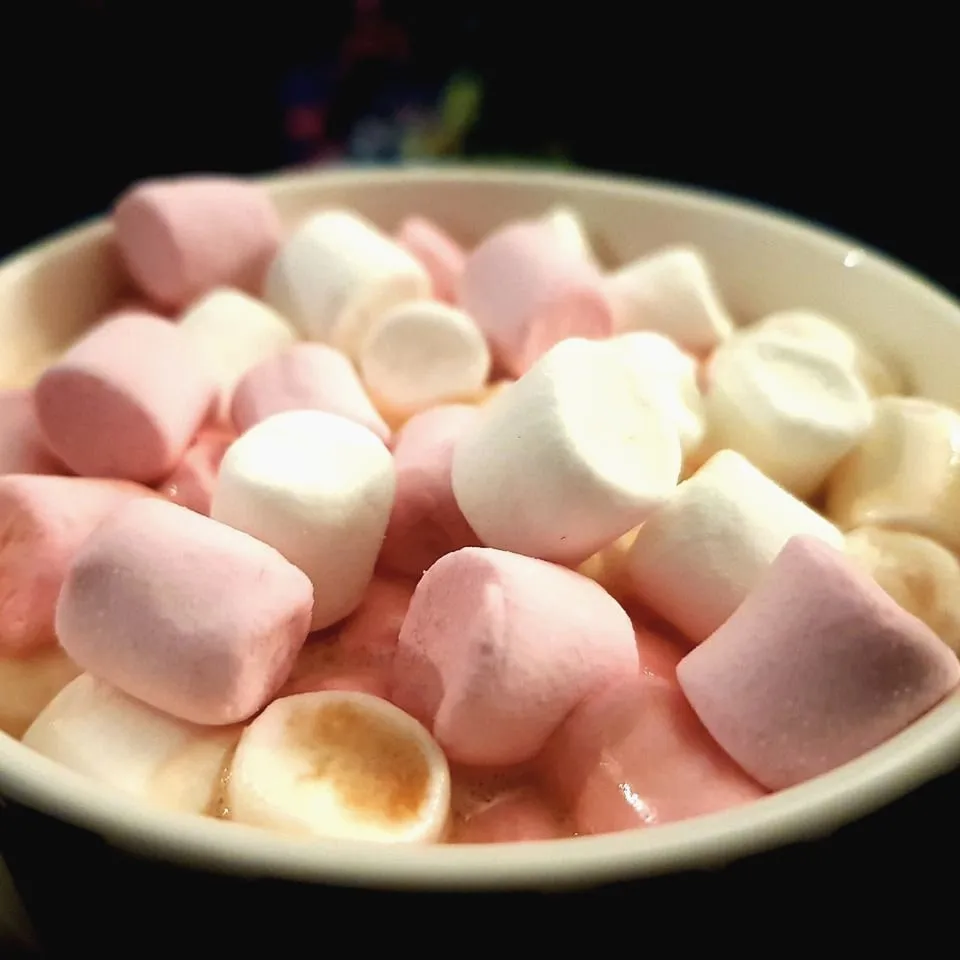
The marshmallow accord evokes soft confectionery: sugar, vanilla, orange blossom and an almost powdery texture.
What it brings
A tender, nostalgic sweetness.
Origins and uses
Marshmallow owes its name to a plant, the marsh mallow (Althaea officinalis), whose root gave a mucilage used in a honey-sweetened preparation for sore throats. In the nineteenth century, French confectioners replaced honey with sugar, then used egg white, gelatine and starch, which made industrial production possible. In the late nineteenth century, it was often flavoured with rose water.
In perfumery, marshmallow is a recreated accord: it evokes soft confectionery, with sugar, vanilla, a floral touch and an almost powdery texture. It sits in the base of compositions, making them tender and gourmand.
In our catalogue, marshmallow softens the base of Love, don't be shy by Kilian Paris, Moon Carnival by Vilhelm Parfumerie and Sintra by Memo Paris, three very different fragrances.
Text written with the help of AI, based on reference sources: encyclopedias, raw-material manufacturers and official information from the fragrance houses.
Material profile
- Family
- Gourmand notes
- Nature
- Perfumer’s accord
- Origin
- A recomposed gourmand accord.
- How it is obtained
- Recomposed by the perfumer
- On Volute
- 4 fragrances
The fragrances that reveal it
In the same family · Gourmand notes
- Almond
- Almond milk
- Amaretto
- Black truffle
- Brandy
- Buckwheat
- Butter
- Calvados
- Caramel
- Chantilly cream
- Chestnut
- Chocolate
- Cocoa
- Coconut
- Coffee
- Cognac
- Cotton candy
- Coumarin
- Crème brûlée
- Gourmand accord
- Halva
- Hazelnut
- Honey
- Liquorice
- Malt
- Milky notes
- Nougat
- Pistachio
- Praline
- Rice
- Roasted barley
- Rose liqueur
- Rum
- Sesame
- Sugar
- Sugar cane
- Toffee
- Tonka bean
- Vanilla
- Vodka
- Wheat
- Whipped cream
- Whisky